First, many health experts, including the surgeon general of the United States, told the public simultaneously that masks weren’t necessary for protecting the general public and that health care workers needed the dwindling supply. This contradiction confuses an ordinary listener. How do these masks magically protect the wearers only and only if they work in a particular field?
Second, there were attempts to bolster the first message, that ordinary people didn’t need masks, by telling people that masks, especially medical-grade respirator masks (such as the N95 masks), needed proper fitting and that ordinary people without such fitting wouldn’t benefit. This message was also deeply counterproductive. Many people also wash their hands wrong, but we don’t respond to that by telling them not to bother. Instead, we provide instructions; we post signs in bathrooms; we help people sing songs that time their hand-washing. Telling people they can’t possibly figure out how to wear a mask properly isn’t a winning message. Besides, when you tell people that something works only if done right, they think they will be the person who does it right, even if everyone else doesn’t.
Third, of course masks work — maybe not perfectly and not all to the same degree, but they provide some protection. Their use has always been advised as part of the standard response to being around infected people, especially for people who may be vulnerable. World Health Organization officials wear masks during their news briefings. That was the reason I had bought a few in early January — I had been conducting research in Hong Kong, which has a lot of contact with mainland China, and expected to go back. I had studied and taught about the sociology of pandemics and knew from the SARS experience in 2003 that health officials in many high-risk Asian countries had advised wearing masks.
Fourth, the W.H.O. and the C.D.C. told the public to wear masks if they were sick. However, there is increasing evidence of asymptomatic transmission, especially through younger people who have milder cases and don’t know they are sick but are still infectious. Since the W.H.O. and the C.D.C. do say that masks lessen the chances that infected people will infect others, then everyone should use masks. If the public is told that only the sick people are to wear masks, then those who do wear them will be stigmatized and people may well avoid wearing them if it screams “I’m sick.” Further, it’s very difficult to be tested for Covid-19 in the United States. How are people supposed to know for sure when to mask up?
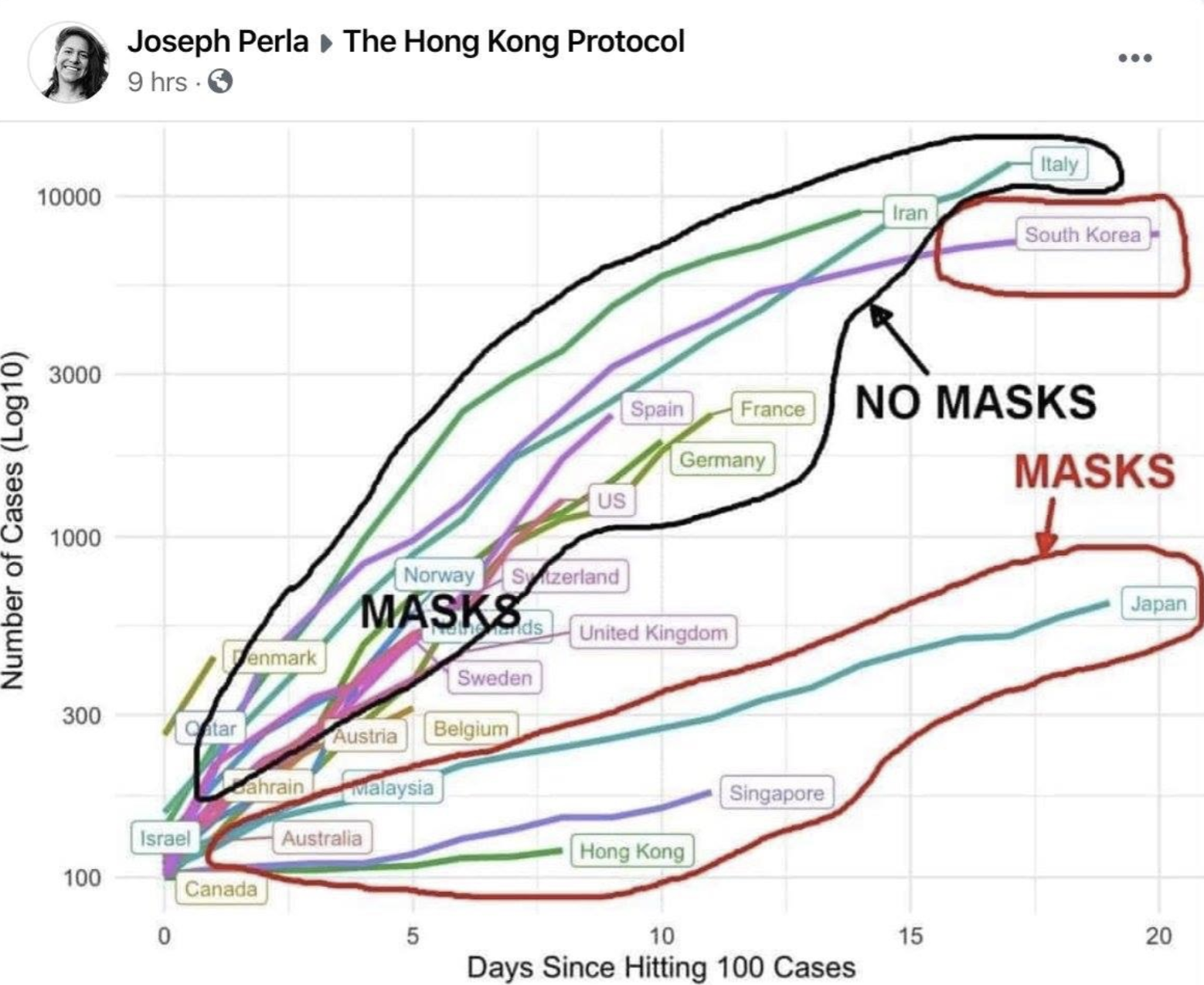
Fifth, places like Hong Kong and Taiwan that jumped to action early with social distancing and universal mask wearing have the pandemic under much greater control, despite having significant travel from mainland China. Hong Kong health officials credit universal mask wearing as part of the solution and recommend universal mask wearing. In fact, Taiwan responded to the coronavirus by immediately ramping up mask production.
Sixth, masks are an important signal that it’s not business as usual as well as an act of solidarity. Pandemics require us to change our behavior — our socialization, hygiene, work and more — collectively, and knowing our fellow citizens are on board is important for all efforts.
Finally, providing top-down guidance with such obvious contradictions backfires exactly because lack of trust is what fuels hoarding and misinformation. It used to be said that back in the Soviet Union, if there was a line, you first got in line and then figured out what the line was for — people knew that there were going to be shortages and that the authorities often lied, so they hoarded. And when people feel as though they may not be getting the full truth from the authorities, snake-oil sellers and price gougers have an easier time.
Given that there is indeed a mask shortage and that medical workers absolutely do need these masks more, what should the authorities have said? The full painful truth. Despite warnings from experts for decades, especially after the near miss of SARS, we still weren’t prepared for this pandemic, and we did not ramp up domestic production when we could, and now there’s a mask shortage — and that’s disastrous because our front line health care workers deserve the best protection. Besides, if they fall ill, we will all be doomed.
Research shows that during disasters, people can show strikingly altruistic behavior, but interventions by authorities can backfire if they fuel mistrust or treat the public as an adversary rather than people who will step up if treated with respect. Given that even homemade masks may work better than no masks, wearing them might be something to direct people to do while they stay at home more, as we all should.
We will no doubt face many challenges as the pandemic moves through our societies, and people will need to cooperate. The sooner we create the conditions under which such cooperation can bloom, the better off we all will be.